From Plantation to Feed Mill: The Journey of Palm Kernel Expeller
A behind-the-scenes look at how PKE is produced, traded, and delivered to feed manufacturers worldwide.
In the intricate web of global agrifood systems, palm kernel expeller (PKE) serves as a vital link, transforming a palm oil byproduct into a high-value animal feed ingredient that underpins livestock productivity worldwide. As the global animal feed market accelerates toward USD 681.8 billion by 2033, PKE’s role in delivering cost-effective, protein-rich nutrition—typically 15% protein and 6% lipids—has never been more critical, especially amid rising meat demand and a projected 30% global population surge by 2050. Indonesia, the epicenter of palm production, exported palm oil and derivatives worth USD 17.277 billion in the first half of 2025, a 34.64% year-on-year increase, with PKE forming a key component of this trade.
For corporate buyers, institutional investors, and policymakers contending with supply chain volatility and sustainability mandates, tracing PKE’s journey from tropical plantations to international feed mills reveals actionable strategies to mitigate risks, optimize costs, and align with ESG imperatives in a market poised for 4.2% CAGR growth to USD 10.27 billion by 2035.
From Plantation to Extraction: The Production Process Unveiled
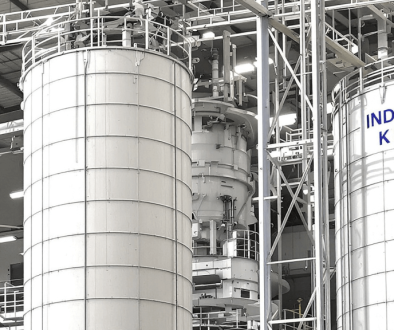
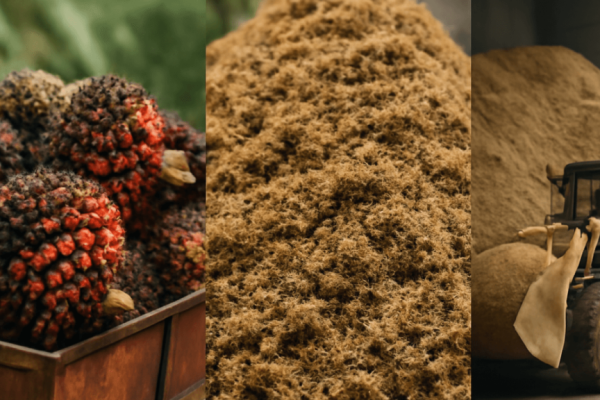
PKE’s odyssey begins in the lush oil palm plantations of Indonesia and Malaysia, where mature palm fruits are harvested year-round, yielding fresh fruit bunches (FFB) that are swiftly transported to mills to preserve quality. The initial stage involves sterilization and threshing to separate the fruits from bunches, followed by digestion and pressing to extract crude palm oil (CPO). The remaining nuts undergo cracking in specialized machines, where shells are separated from kernels via winnowing or hydrocyclone processes.
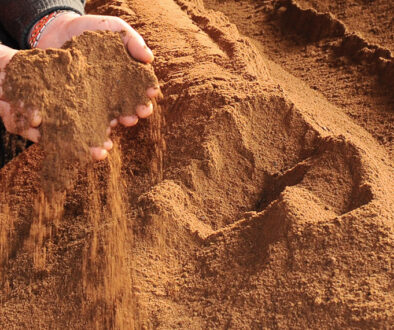
The kernels are then conditioned and fed into screw presses or expellers, where mechanical pressure extracts palm kernel oil (PKO), leaving behind the fibrous PKE residue. This expeller process, often conducted at temperatures below 100°C to retain nutritional integrity, produces PKE with balanced energy and protein profiles ideal for ruminants, supporting daily intakes up to 6kg for dairy cows. In 2024, Indonesia’s palm oil production reached 52.76 million metric tons (MMT), with projections for 2025/26 at 47 MMT, ensuring ample kernel supply for PKE output. Advanced facilities integrate pre-treatment steps like cleaning and crushing to enhance efficiency, reducing waste and aligning with circular economy principles where PKE repurposes up to 70% of palm biomass that might otherwise contribute to emissions.
For strategic decision-makers, this production phase offers insights into vertical integration opportunities: Investing in traceable, smallholder-inclusive plantations can secure supply amid climate risks, while adopting low-emission expeller technologies could cut operational costs by 5-10% through improved yield recovery.
Trading Dynamics: Navigating Global Markets and Export Hubs
Once produced, PKE enters a dynamic trading ecosystem dominated by Southeast Asian exporters, with Indonesia commanding a significant share through ports like Dumai and Belawan. In the first seven months of 2025, Indonesia’s palm oil exports hit USD 14.02 billion, up nearly 33% year-on-year, driven by demand from Pakistan and India for derivatives including PKE.
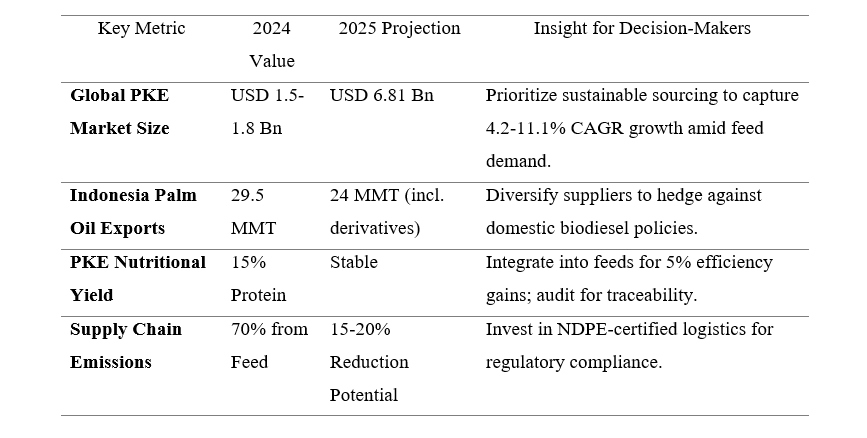
Global PKE market intelligence for 2025 projects a valuation of USD 6.81 billion, reflecting its appeal as a sustainable alternative to soybean meal in animal feeds, with applications spanning poultry (40% market share), livestock, and aquaculture.Trading involves bulk contracts via commodity exchanges or direct B2B negotiations, often priced against benchmarks like Malaysian PKO futures. Key players include integrated agribusiness firms that bundle PKE with traceability certifications, addressing buyer demands for deforestation-free sourcing under frameworks like NDPE (No Deforestation, No Peat, No Exploitation). Export volumes from Indonesia surged in 2025, with cumulative palm product exports reaching 11 MMT in the first half, underscoring resilience despite biodiesel mandates diverting some kernels domestically. For investors, this translates to opportunities in futures hedging: With PKE prices influenced by crude oil fluctuations (due to PKO’s biofuel links), forward contracts can lock in margins amid projected 11.1% CAGR through 2032.
Delivery and Supply Chain: Ensuring Seamless Logistics to Feed Mills
The final leg of PKE’s journey involves sophisticated logistics networks that transport the product from mills to global feed manufacturers. Bagged or bulk shipments are loaded onto vessels for export, with integrated chains employing real-time tracking to minimize delays. In Indonesia, efficient port infrastructure supports timely delivery, aligning with global standards where PKE accounts for significant feed efficiency gains, such as 5% improvements in livestock conversion ratios.
Upon arrival, PKE is distributed to feed mills via rail or truck, where it’s blended into compound feeds tailored for regional climates—crucial in markets like Europe and New Zealand, where it supplements grass-based dairy systems.Sustainability-focused chains, such as those certified by RSPO, incorporate blockchain for end-to-end traceability, reducing emissions that constitute 70% of livestock’s carbon footprint. In 2025, amid geopolitical frictions, diversified routing—bypassing congested chokepoints like the Red Sea—has proven essential, with Indonesia’s exports to the US averaging 2.25 MMT annually.
Corporate buyers can leverage this by partnering with logistics providers offering green shipping options, potentially slashing Scope 3 emissions by 15-20% while ensuring compliance with EU deforestation regulations.
Addressing Challenges: Resilience in a Volatile Landscape
Despite its strengths, PKE’s supply chain faces headwinds in 2025, including deforestation scrutiny, export levies in Indonesia that challenge competitiveness against Malaysian suppliers, and global trade disruptions from tariffs and geopolitical tensions.
Supply chain complexities, such as excess capacity and rising freight costs, exacerbate these issues, while climate impacts threaten plantation yields.
Yet, these challenges present opportunities: Adopting AI-driven predictive analytics for inventory management can buffer against volatility, while investing in regenerative agriculture—reducing deforestation by 20% in certified chains—enhances brand value for ESG investors.
Strategic Imperatives: Charting a Sustainable Path Forward
PKE’s journey from plantation to feed mill exemplifies the fusion of agricultural innovation and global trade, positioning it as a linchpin for food security in an uncertain world. For corporate leaders, this mandates robust due diligence in supplier selection to navigate 2025’s trade frictions; investors should eye funds targeting palm byproducts for resilient returns; and governments can advance policies promoting circular feeds to bolster domestic agriculture. By embracing traceable, efficient supply chains, stakeholders can not only sustain livestock sectors but also drive equitable growth in a market ripe for transformation.