Why Global Feed Mills Choose Indonesian Palm Kernel Expeller
Exploring cost advantages, quality consistency, and sustainability in Indonesia’s PKE exports.
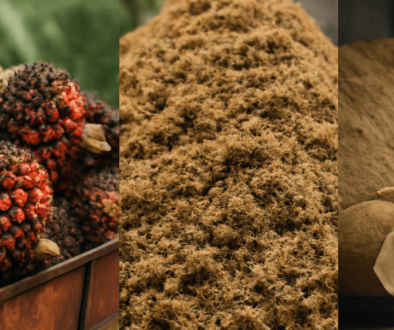
As the global animal feed market surges toward USD 605.3 billion in 2025, propelled by escalating demand for protein-rich livestock products amid a projected 30% population growth by 2050, palm kernel expeller (PKE) has solidified its position as an indispensable ingredient. Derived from the mechanical extraction of palm kernels, PKE offers a nutrient-dense profile—typically 15-18% protein, 6-8% lipids, and high fiber content—making it ideal for ruminants, poultry, and aquaculture. Indonesia, commanding over 58% of global palm oil production with 46 million metric tons forecasted for 2025/26, leads PKE exports, shipping volumes that contributed to USD 17.277 billion in palm derivatives in the first half of 2025 alone. For corporate buyers and institutional investors grappling with volatile commodity prices and regulatory pressures, Indonesia’s PKE ecosystem provides a strategic edge through cost efficiencies, reliable quality, and advancing sustainability—key levers for optimizing supply chains in a market expanding at 4-7% CAGR through 2035.
Cost Advantages: Scaling Efficiency in a Competitive Landscape
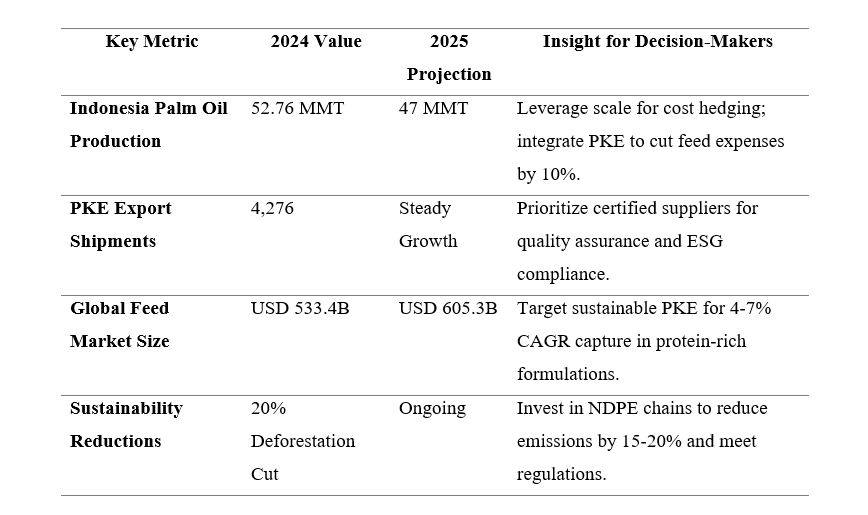
Indonesia’s dominance in PKE stems from its vast palm oil infrastructure, enabling economies of scale that drive down production costs. In 2024, the country exported 29.5 million metric tons of palm products, with PKE forming a substantial share, benefiting from low labor expenses and integrated processing that yields competitive pricing—often 20-30% below alternatives like soybean meal. Market intelligence for 2025 projects PKE prices remaining attractive amid global feed ingredient volatility, where soybean meal faces upward pressure from weather disruptions and trade tensions. For instance, PKE’s cost-effectiveness allows inclusion rates up to 30% in diets, reducing overall feed expenses by 5-10% while maintaining nutritional efficacy, as evidenced by its role in boosting feed conversion ratios in dairy and beef operations.
This pricing edge is amplified by Indonesia’s export surge: Palm oil and derivatives hit USD 14.02 billion in the first seven months of 2025, up 33% year-on-year, driven by demand from Pakistan and India. For feed mills, this translates to actionable strategies like forward contracting with Indonesian suppliers to hedge against grain price spikes, potentially locking in 15-20% savings in a year where global feed additives are projected to reach USD 612.3 million. Investors eyeing vertical integration can capitalize on PKE’s low-cost profile, especially as alternative feeds like DDGS face higher transportation costs from U.S. origins.
Quality Consistency: Meeting Global Standards with Precision
Global feed mills prioritize Indonesian PKE for its rigorous quality controls, ensuring batch-to-batch consistency that aligns with international standards like ISO 9001 and GMP+. Accredited labs test for nutritional benchmarks—15% protein, superior mineral content (e.g., higher B, Mg, P than pasture)—and low aflatoxin levels, making it a reliable staple for ruminants at 2-6kg daily intake. In 2024-2025, over 4,276 PKE shipments from Indonesia met stringent import criteria, underscoring traceability from plantation to port.
This consistency enhances feed formulation predictability, supporting 5% improvements in livestock efficiency when blended with energy sources like corn. For decision-makers, partnering with certified Indonesian exporters—many holding RSPO accreditation—mitigates risks of variability seen in less regulated sources, enabling premium pricing for end-products like dairy yields boosted by 1L/cow/day. As 2025 regulations tighten on feed safety, investing in tech-enabled quality assurance, such as blockchain tracing, positions mills to comply while leveraging Indonesia’s scalable output.
Sustainability: Aligning with ESG Imperatives
Sustainability controversies have plagued palm derivatives, yet Indonesia’s PKE sector is pivoting through targeted initiatives, reducing deforestation by 20% in supply chains via NDPE policies. In 2025, collaborations like the Aceh Sustainable Palm Oil Working Group—involving Nestlé, PepsiCo, and Unilever—advance regenerative practices, repurposing byproducts to cut emissions where feed accounts for 70% of livestock footprints. PKE’s circular model—utilizing palm waste—aligns with UN goals, with 2025 projections emphasizing eco-friendly sourcing amid a 4.15% CAGR in Indonesia’s animal feed market to USD 12.5 billion by 2033.
For stakeholders, this offers ESG-compliant pathways: Sourcing certified PKE minimizes Scope 3 emissions by 15-20%, appealing to investors in green funds. Policymakers can amplify this through trade pacts promoting sustainable exports, as Indonesia’s biofuel mandates (B40) balance domestic use with global supply.
Navigating Headwinds: Risks and Mitigation Strategies
Challenges persist, including export levies raising costs and tariffs potentially curbing U.S. inflows from 2.25 million tons annually. Yet, diversification—blending PKE with local byproducts—can offset volatility, while tech investments in yield optimization sustain 4-5% CAGR growth.
Strategic Outlook: Positioning for Long-Term Resilience
Indonesia’s PKE exports embody a trifecta of cost, quality, and sustainability, making it a preferred choice for feed mills worldwide. Corporate leaders should audit chains for Indonesian integration to enhance profitability; investors, allocate to sustainable palm funds amid market booms; and governments, foster policies amplifying ethical trade. By embracing this ecosystem, stakeholders can drive efficient, responsible growth in an evolving agrifood landscape.